Compare cities side by side in Breather
Enter your target city and spend — see exactly how much corpus you need and how long it lasts.
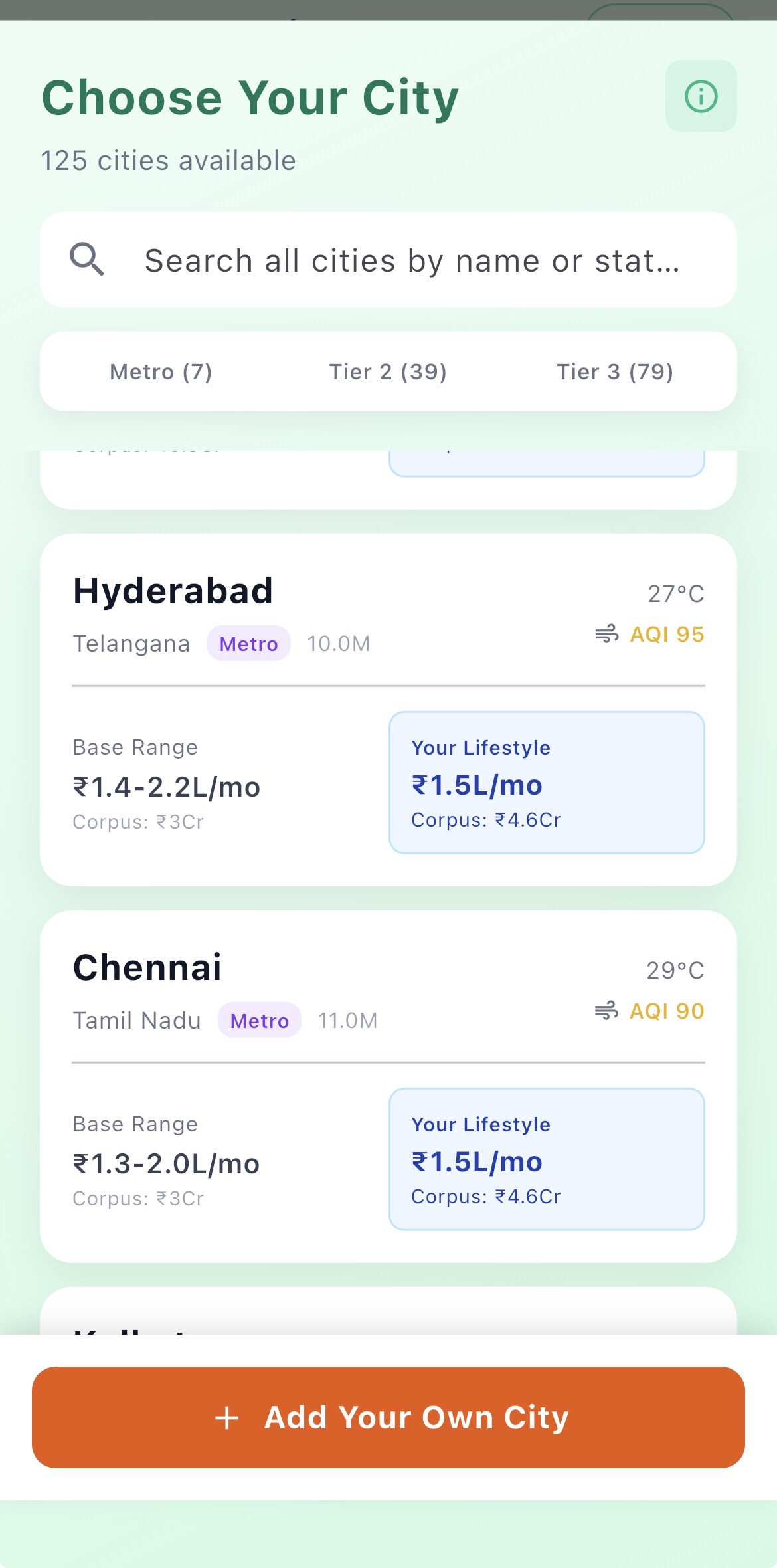
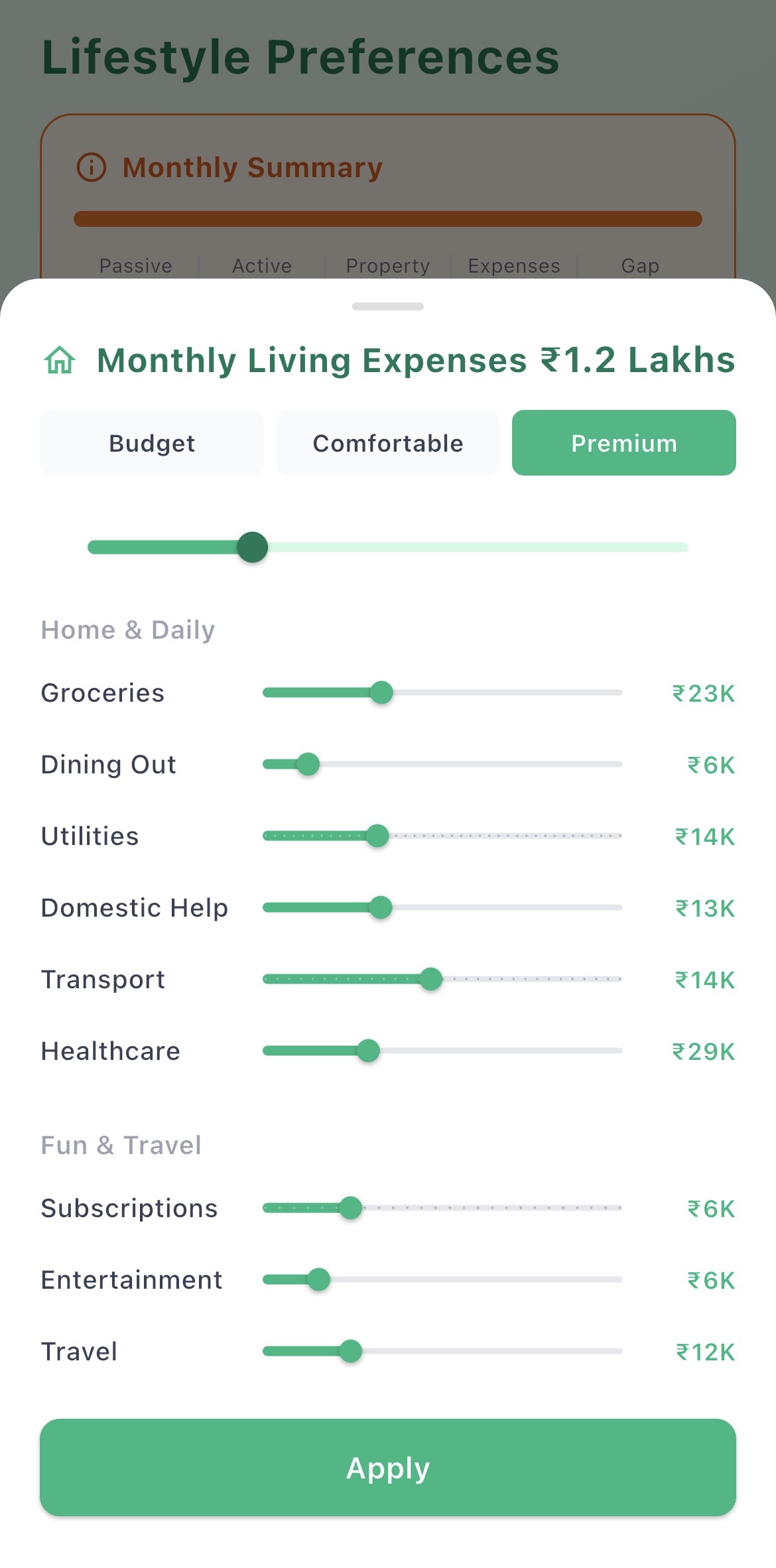
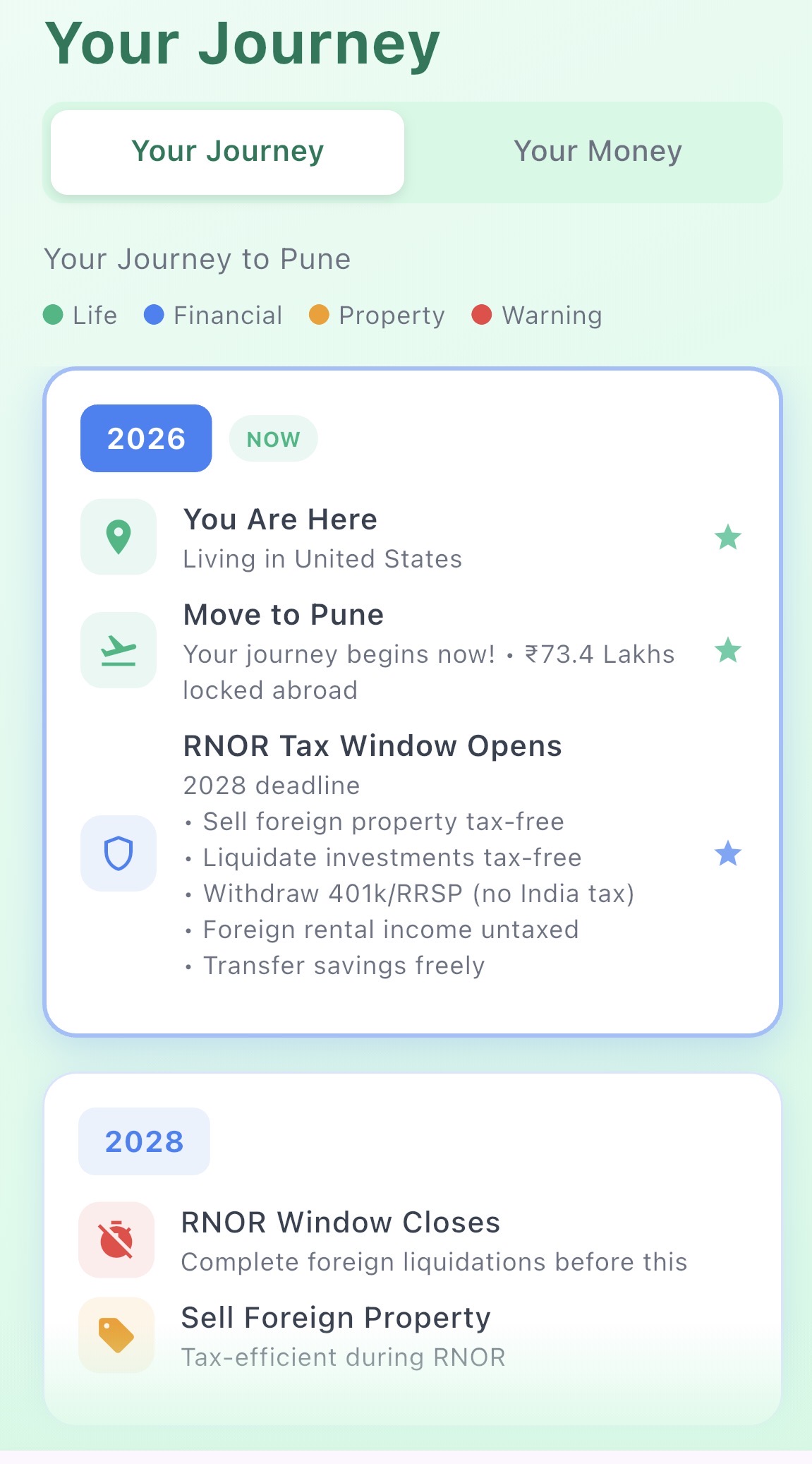
Your city choice determines 60–70% of your monthly spend — and by extension, how much corpus you need. This is the most comprehensive city-by-city comparison for NRIs: real costs, AQI, healthcare, and honest trade-offs.
Most NRIs spend months researching investment strategies, withdrawal rates, and tax implications — and then choose their city based on where family happens to live. That is understandable, but it is worth understanding what you are trading financially.
The numbers are stark: a comfortable NRI-standard retirement in Mumbai costs ₹2.2–3L per month. The same lifestyle in Kochi costs ₹1.1–1.5L. That gap — roughly ₹1.2L/month — compounds into ₹1.44 Cr per year, and over 10 years becomes ₹14.4 Cr in cumulative spend difference (before inflation). In corpus terms, it means the Mumbai retiree needs ₹2.5–3 Cr more in savings just to account for city costs.
This is not an argument against Mumbai or Bangalore — those cities offer real advantages that matter for quality of life. But it is an argument for making the choice with clear eyes about what it costs.
Once you settle on a city, plug it into the Breather retirement calculator to get your full corpus requirement, projected spend at 80, and inflation-adjusted timeline. The calculator takes 3 minutes and shows you exactly what the numbers mean for your specific situation.
These are the cities most NRIs grew up dreaming about or have strong connections to. They offer the best infrastructure, the most international connectivity, and the largest NRI communities. They also cost the most — and come with real trade-offs.
Monthly costs: ₹2.2–3L (NRI lifestyle). Accommodation alone — a decent 2BHK in Bandra, Powai, or Juhu — runs ₹60,000–₹1.2L/month in rent. Food, transport, entertainment, and healthcare add up quickly in India's most expensive city.
Pros: Unmatched infrastructure for a major Indian city. World-class restaurants, international retail, a genuinely cosmopolitan culture. The sea. Chhatrapati Shivaji Maharaj International Airport with direct flights to 40+ international destinations. Financial hub — useful if you have investments to manage. The best nightlife in India.
Cons: The most expensive city in India by a significant margin. Traffic is genuinely bad and getting worse. Humidity from June–September is oppressive. Space is at a premium — even a large budget buys less than it would in any other major city. AQI is moderate (85 annual average) and can spike in winter.
Best for: NRIs who grew up in Mumbai, have deep family ties there, or genuinely want the energy and cosmopolitan feel of India's financial capital — and have the corpus to support it (₹8–10 Cr minimum for comfortable, long-term retirement).
Corpus needed for comfortable retirement at 50: ₹9–10 Cr at ₹2.5–3L/month spend.
Monthly costs: ₹1.8–2.5L. A 2BHK in Indiranagar, Koramangala, or Whitefield runs ₹35,000–₹70,000/month. Total lifestyle costs are meaningfully lower than Mumbai but still solidly metro-tier.
Pros: The best climate of any major Indian city — 15–28°C year-round with almost no extreme heat or humidity. India's largest tech NRI community, so you will find your people quickly. Genuinely excellent hospitals (Manipal, Apollo, Narayana Health, Aster). Growing arts and food scene. Proximity to Mysore, Coorg, and coastal Karnataka for weekend trips.
Cons: Traffic has gotten significantly worse over the past decade and continues to worsen as the city grows rapidly. Water supply issues in some neighbourhoods. Property prices are high and rising. The city is sprawling and lacks the density of Mumbai or Chennai. Some neighbourhoods feel less walkable than they once did.
Best for: Tech NRIs who want a familiar ecosystem, good weather, and metro amenities. Bangalore has more returning tech workers than any other Indian city — the social network reintegration is the fastest here.
Corpus needed for comfortable retirement at 50: ₹7–8 Cr at ₹1.8–2.2L/month spend.
Monthly costs: ₹1.7–2.2L. Gurgaon particularly has a large expat-NRI community and well-developed housing colonies. Costs are lower than Bangalore for equivalent quality of life.
Pros: Proximity to the Himalayas — Shimla, Manali, Mussoorie, Rishikesh all within driving distance. Rich cultural scene: classical music, theatre, Mughal history, Old Delhi food. Indira Gandhi International Airport with the most international routes in India. Strong business ecosystem if you do any consulting.
Cons: The air quality problem is serious and not improving. Delhi NCR's AQI from October to February regularly exceeds 200 (hazardous) — some days hitting 400+. This is a genuine health concern for long-term retirement, not just an inconvenience. Extreme summers (45°C+ in May–June). Political intensity is higher than in southern cities.
Best for: NRIs with strong north India family connections who can either (a) escape to the hills for 3–4 months in winter, or (b) have the health tolerance for the AQI. Not recommended for those with respiratory conditions.
Corpus needed for comfortable retirement at 50: ₹6.5–7.5 Cr at ₹1.8–2.2L/month spend.
This tier consistently produces the best value for NRIs. You get urban amenities, good hospitals, solid NRI communities, and costs that are 25–45% lower than the Tier 1 metros. These are the cities that make early retirement at 50 genuinely achievable for NRIs with $500K–$700K in savings.
Monthly costs: ₹1.4–1.8L. A quality 2BHK in Banjara Hills, Jubilee Hills, or Kondapur runs ₹25,000–₹50,000/month. The best value-to-quality ratio of any major Indian city.
Pros: Genuinely good infrastructure — wide roads, relatively less traffic than Bangalore, good metro. Excellent hospitals: Apollo, KIMS, Yashoda, Care. Telangana's tech boom (Cyberabad) means a large, growing NRI community. Best biryani in India, arguably the most diverse food scene after Mumbai. AQI is notably better than north Indian cities (65 annual average). Relatively affordable property to buy if you want to own.
Cons: Very hot summers — May and June regularly hit 40–44°C. The city has grown rapidly and some areas still feel unfinished. The political situation has been in flux with bifurcation, though this settles into the background of daily life quickly.
Best for: Tech NRIs who want big-city amenities at 30–40% lower cost than Bangalore. The Hyderabad tech NRI community is large enough that you will not feel isolated, and the city has the infrastructure to support a comfortable urban retirement.
Corpus needed for comfortable retirement at 50: ₹5–6 Cr at ₹1.4–1.7L/month spend.
Monthly costs: ₹1.3–1.7L. Areas like Kalyani Nagar, Baner, Viman Nagar, and Aundh offer 2BHK rentals at ₹25,000–₹45,000/month in good quality apartments.
Pros: Excellent weather — similar to Bangalore but slightly warmer in summer. Large, educated, cosmopolitan population thanks to its university and IT sectors. Proximity to Mumbai (3 hours) without Mumbai's costs. Strong Maharashtra cultural identity combined with openness. Good hospitals (Ruby Hall, Jehangir, KEM). Active retirement community with clubs, sports facilities, and social infrastructure. Easy access to the Western Ghats for trekking and weekend retreats.
Cons: Traffic has worsened significantly and continues to worsen as the city grows. Some infrastructure gaps — the metro is still being built out. Property prices have risen sharply in the last 5 years.
Best for: A cosmopolitan crowd that wants a balance of urban amenities, proximity to nature, cultural life, and reasonable cost. Pune has a large, active returning NRI community and the social fabric for retirement is well-developed.
Corpus needed for comfortable retirement at 50: ₹4.8–5.5 Cr at ₹1.3–1.6L/month spend.
Monthly costs: ₹1.3–1.6L. Areas like Adyar, Velachery, Anna Nagar, and OMR offer good quality 2BHK rentals at ₹25,000–₹40,000/month.
Pros: Tamil cultural depth — music, dance, temples, festivals. Excellent hospitals, particularly for cardiac care (Apollo Chennai is one of the best cardiac hospitals in Asia, MIOT is world-class for orthopaedics). The Marina Beach is genuinely beautiful. Cuisine is outstanding. Solid AQI (55 annual average). Strong Tamil NRI community returning from the US and UK. Lower cost than Bangalore or Pune for comparable quality.
Cons: Heat and humidity are significant — April to June is brutal. The city can feel insular if you are not Tamil-speaking, though this is improving. Flooding risk in certain neighbourhoods during monsoon. Less cosmopolitan feel than Bangalore or Pune for non-Tamil NRIs.
Best for: Tamil NRIs returning home. If Tamil Nadu is home, Chennai offers an unbeatable combination of cultural connection, world-class healthcare, and reasonable cost. For non-Tamil NRIs, it requires more social adjustment than other cities on this list.
Corpus needed for comfortable retirement at 50: ₹4.5–5 Cr at ₹1.3–1.5L/month spend.
Monthly costs: ₹1.1–1.5L. A quality 2BHK in Kakkanad, Marine Drive, or Edapally runs ₹20,000–₹35,000/month. The best quality of life per rupee of any major Indian city.
Pros: The backwaters and natural beauty are genuinely extraordinary — this is one of the most beautiful places to live in India. High literacy and very cosmopolitan Kerala culture — English is widely spoken and the social infrastructure for returning NRIs (Pravasi Bharatiya) is the most developed in India. Excellent healthcare: Aster Medcity is one of India's best hospitals. The best AQI of any major city on this list (45 annual average). Relatively cooler than other south Indian cities. International airport with good connectivity. Food is exceptional.
Cons: Smaller city — limited nightlife, entertainment options, and the metropolitan variety of a Bangalore or Pune. Monsoon season (June–September) is very intense — beautiful, but limits mobility. The city is growing but some infrastructure (roads, public transport) has not kept pace. If you need the buzz of a large metro, Kochi will feel quiet.
Best for: Kerala NRIs and those who prioritise a relaxed, nature-connected, culturally rich retirement over metro energy. The Kerala government's active support for Pravasi return means practical processes (property registration, NRE/NRO banking, social integration) are smoother here than in most states.
Corpus needed for comfortable retirement at 50: ₹3.8–4.5 Cr at ₹1.1–1.4L/month spend.
Some NRIs are not looking for a metro substitute — they are looking for something genuinely different from the life they left. For that cohort, Goa and Pondicherry offer something no other Indian city does: a retirement that feels like a lifestyle choice rather than a relocation.
Monthly costs: ₹1.2–1.8L, with significant seasonal variation — costs spike 30–40% during peak tourist season (November–February) and drop in the off-season. Areas like Panjim, Porvorim, and the quieter north Goa villages (Assagao, Siolim) are where most long-term residents settle, away from the tourist belt.
Pros: The beaches and natural setting are incomparable in India. A vibrant, genuinely international expat community — Goa has more foreign retirees and long-term residents than anywhere else in India, which means a level of cosmopolitan social infrastructure (wine bars, international restaurants, outdoor activities, arts scene) that you will not find in other Indian cities. Dabolim / Mopa airports provide international connectivity. The pace of life is genuinely slower and more Mediterranean in character. Exceptional AQI (25 annual average — the best on this list). Fresh seafood, Portuguese colonial architecture, good weather outside of monsoon.
Cons: The healthcare infrastructure is limited — Manipal Goa is decent for routine care but complex cases require travel to Bangalore or Mumbai (1–2 hours by flight). Tourist crowd intensity in season can be frustrating if you live in the main coastal areas. Property prices in the best areas have risen dramatically over the last decade, driven by demand from both domestic and international buyers. The monsoon (June–September) is intense and isolating for 4 months.
Best for: NRIs who prioritise beaches, international lifestyle, and a relaxed pace over urban infrastructure. Those with the financial comfort to travel for serious healthcare. Not ideal if you have health concerns that require frequent specialist visits.
Corpus needed for comfortable retirement at 50: ₹4.5–5.5 Cr at ₹1.3–1.7L/month spend (accounting for healthcare travel costs).
Monthly costs: ₹80K–1.2L. One of the lowest costs on this list while maintaining a genuinely charming quality of life. The French Quarter (White Town) has a unique colonial European character unlike anywhere else in India.
Pros: The most characterful small city in India for retirement — the French Quarter architecture, Auroville proximity, quiet promenade, and café culture create an atmosphere unlike anything else in the country. Growing expat and NRI community drawn by Auroville's international character. Reasonable weather (not as hot as Chennai, not as humid as Kochi). Proximity to Chennai (3 hours) gives access to Tier 1 hospitals when needed. Very low cost of living relative to quality of life.
Cons: Small city with limited healthcare — for anything serious you need Chennai. Limited career or consulting opportunities if you want to stay professionally active. Social options are narrower than larger cities. The charm is real but it requires genuinely embracing a slower, quieter life.
Best for: The quiet, culturally-inclined, budget-conscious retiree who wants something genuinely beautiful and historically interesting. Works best if Chennai (3 hours) provides your healthcare backstop and you do not need metro-level social infrastructure.
Corpus needed for comfortable retirement at 50: ₹2.8–3.6 Cr at ₹80K–1.1L/month spend — the lowest on this list.
All cities in one view — costs, AQI, healthcare, and our honest verdict. These figures are for NRI-standard living (not budget, not luxury). For a breakdown of what NRI-standard actually means in rupees, or to model your specific spend level, use the Breather calculator.
| City | Monthly Cost (NRI) | AQI (annual avg) | Top Hospital | Expat/NRI Community | Rent 2BHK/mo | Verdict |
|---|---|---|---|---|---|---|
| Mumbai | ₹2.2–3L | 85 (moderate) | Kokilaben, Lilavati | Large | ₹60–120K | Best value only if you love Mumbai specifically |
| Bangalore | ₹1.8–2.5L | 75 (moderate) | Manipal, Apollo | Very large | ₹35–70K | Top pick for tech NRIs — best weather, largest community |
| Delhi NCR | ₹1.7–2.2L | 150+ (poor) | Medanta, AIIMS | Large | ₹30–60K | Only if AQI is not a concern and family ties are strong |
| Hyderabad | ₹1.4–1.8L | 65 (good) | Apollo, KIMS | Medium–Large | ₹25–50K | Best value in a major city — consistent top pick |
| Pune | ₹1.3–1.7L | 70 (good) | Ruby Hall, Jehangir | Medium | ₹25–45K | Excellent all-round choice — weather, culture, access to nature |
| Chennai | ₹1.3–1.6L | 55 (good) | Apollo, MIOT | Medium | ₹25–40K | Best for Tamil NRIs — world-class hospitals, lower cost |
| Kochi | ₹1.1–1.5L | 45 (very good) | Aster Medcity | Medium (Kerala Pravasi network very strong) | ₹20–35K | Best quality of life per rupee on this list |
| Goa | ₹1.2–1.8L | 25 (excellent) | Manipal Goa | Small but growing + large international expat | ₹30–60K | Lifestyle first — limited hospital access is the key trade-off |
| Jaipur | ₹90K–1.3L | 80 (moderate) | Fortis, Mahatma Gandhi | Small | ₹15–30K | Good Rajasthani cultural depth at lower cost — limited NRI community |
| Pondicherry | ₹80K–1.2L | 40 (very good) | JIPMER, Aravind | Small (Auroville international) | ₹12–25K | Unique charm and lowest cost — healthcare backstop via Chennai |
| Tier 2 hometown | ₹70K–1L | Varies | Varies | Small | ₹10–20K | Lowest cost + strongest family support — social fabric matters most |
Note on AQI: PM2.5 annual average (µg/m³). WHO guideline is 5. India's national standard is 40. "Good" on this list still exceeds WHO standards — India's air quality challenge is real across all cities. Delhi NCR's 150+ figure during winter months makes it qualitatively different from all other cities on this list.
For NRIs planning retirement in India, healthcare quality is not a nice-to-have — it is the planning constraint that must be satisfied first. Everything else is secondary.
The good news: India's top hospitals are genuinely world-class. Apollo Hospitals, Manipal Hospitals, Aster Medcity, Narayana Health, Medanta, and AIIMS deliver outcomes comparable to the best US hospitals at dramatically lower cost. A cardiac bypass surgery that costs $80,000–$150,000 in the US costs ₹3–6L in India (roughly $3,500–$7,000). Hip replacement: $40,000 US vs ₹2–4L India. Cancer treatment: $200,000+ US vs ₹5–15L India for comparable protocols.
The key variables for NRI healthcare planning are:
Cities ranked by overall healthcare access for NRIs: (1) Bangalore (multiple Tier 1 hospital systems, specialist density), (2) Chennai (world-class cardiac, orthopaedics, oncology), (3) Hyderabad (Apollo, KIMS, Yashoda), (4) Mumbai (Kokilaben, Lilavati, Breach Candy), (5) Kochi (Aster Medcity), (6) Pune (Ruby Hall, KEM).
Use the Breather calculator to model healthcare as a line item — it typically adds ₹15,000–₹30,000/month to retirement budgets when insurance premiums and out-of-pocket expenses are counted correctly.
After the detailed comparison above, here is the decision framework that most returning NRIs find genuinely useful. It is designed to narrow from 10+ options to 2–3 real candidates based on your priorities.
Monthly budget under ₹1.5L → Kochi, Pondicherry, Jaipur, or your Tier 2 hometown. These cities let you retire comfortably on a ₹3.5–4.5 Cr corpus. If you want urban amenities at this budget, Kochi is the clear choice. If you want the lowest possible cost with family support, a Tier 2 hometown with good local healthcare wins.
Budget ₹1.5–2L + want urban life → Hyderabad or Pune, clearly. Both offer everything you need from a major city — good hospitals, educated social circles, international-level restaurants and retail, strong NRI communities — at costs that are 30–40% lower than Mumbai or Bangalore. Hyderabad if you are from a Telugu background or want slightly more metro-scale. Pune if you want more proximity to nature and a Maharashtra cultural context.
Budget ₹2L+ + want metro energy → Bangalore, full stop. The weather (best in India), the tech NRI community (largest in India), and the quality of life infrastructure make it the clear choice for anyone who can afford it. Mumbai only beats Bangalore if you have a specific reason to be there — family, business connections, or a love for the city that is personal and irreplaceable.
Want lifestyle over infrastructure → Goa or Pondicherry. Goa if you want beaches, international social life, and energy (and can handle the tourist season and the healthcare trade-off). Pondicherry if you want quiet, culture, and the most interesting small-city atmosphere in India.
Family already in a specific city → That city, unless the reasons against it are overwhelming (primarily: Delhi NCR AQI for those with respiratory conditions). The social and family fabric of retirement matters enormously for mental health and wellbeing — do not underestimate this in the financial optimisation. A financially suboptimal city with a strong family network will almost always produce better life outcomes than a financially optimal city where you are isolated.
Once you have your city shortlist, the next step is to model your corpus requirement in detail. The Breather retirement calculator lets you input your specific city, spend level, and retirement age and get a full 30-year projection — not just a withdrawal rate number. It is the most important 3 minutes you will spend in your R2I planning process.
For a broader look at the India vs abroad cost comparison that underpins all of this, see our India vs USA cost of living analysis for returning NRIs. And for the full selection process — beyond just financials — see our where to retire in India guide.
Related reading: how much money you need to retire in India, retiring at 50 specifically, and if you are coming from the UK or Canada, our guides for retiring in India from the UK and retiring in India from Canada cover the specific financial and practical considerations for those moves.
Enter your target city and spend — see exactly how much corpus you need and how long it lasts.
Breather shows your full retirement projection — corpus, monthly spend, and how long your money lasts — for any Indian city. Free to start.