Compare cities in Breather
See your corpus projection for different cities — and find the one that works for your financial situation.
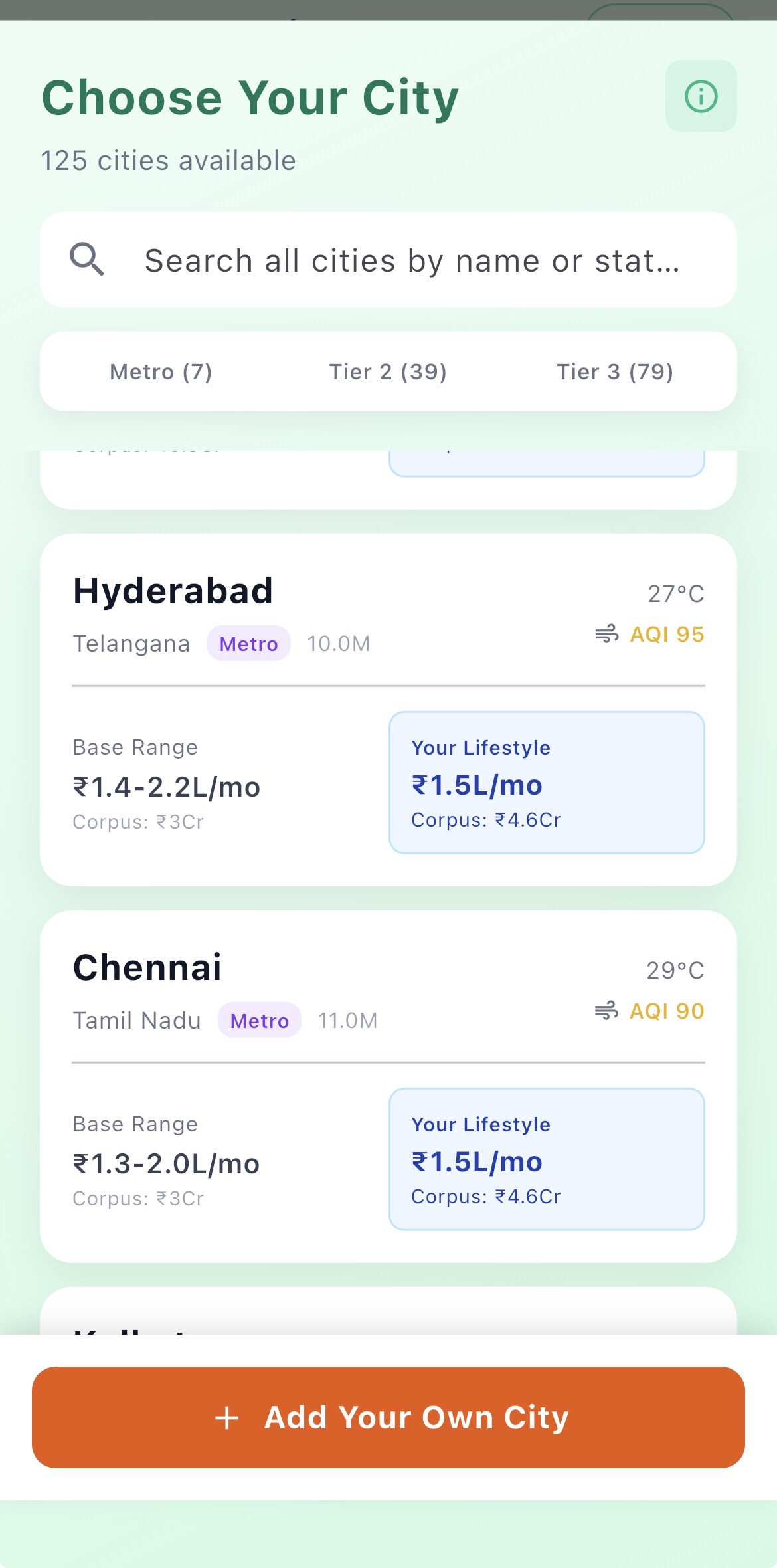
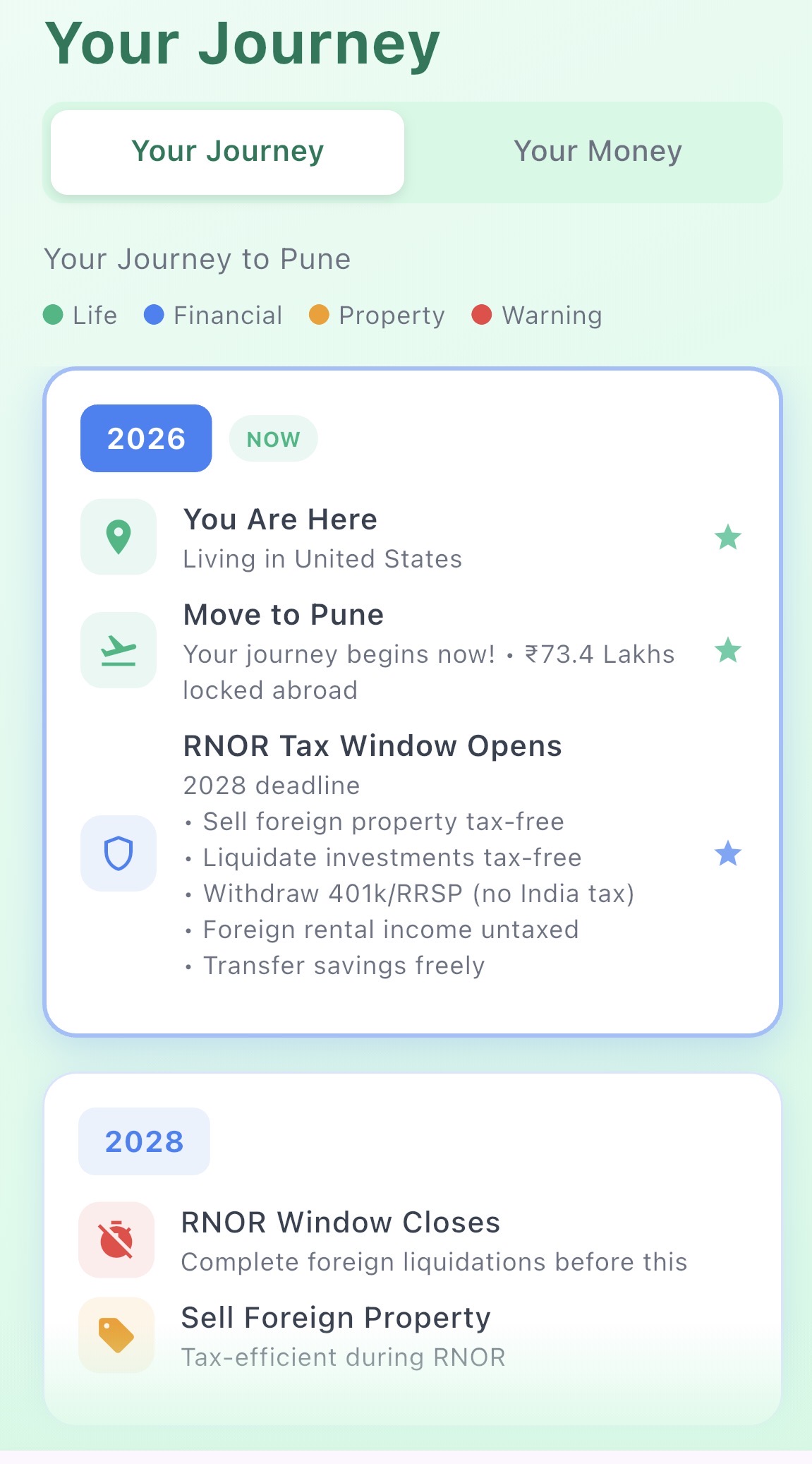
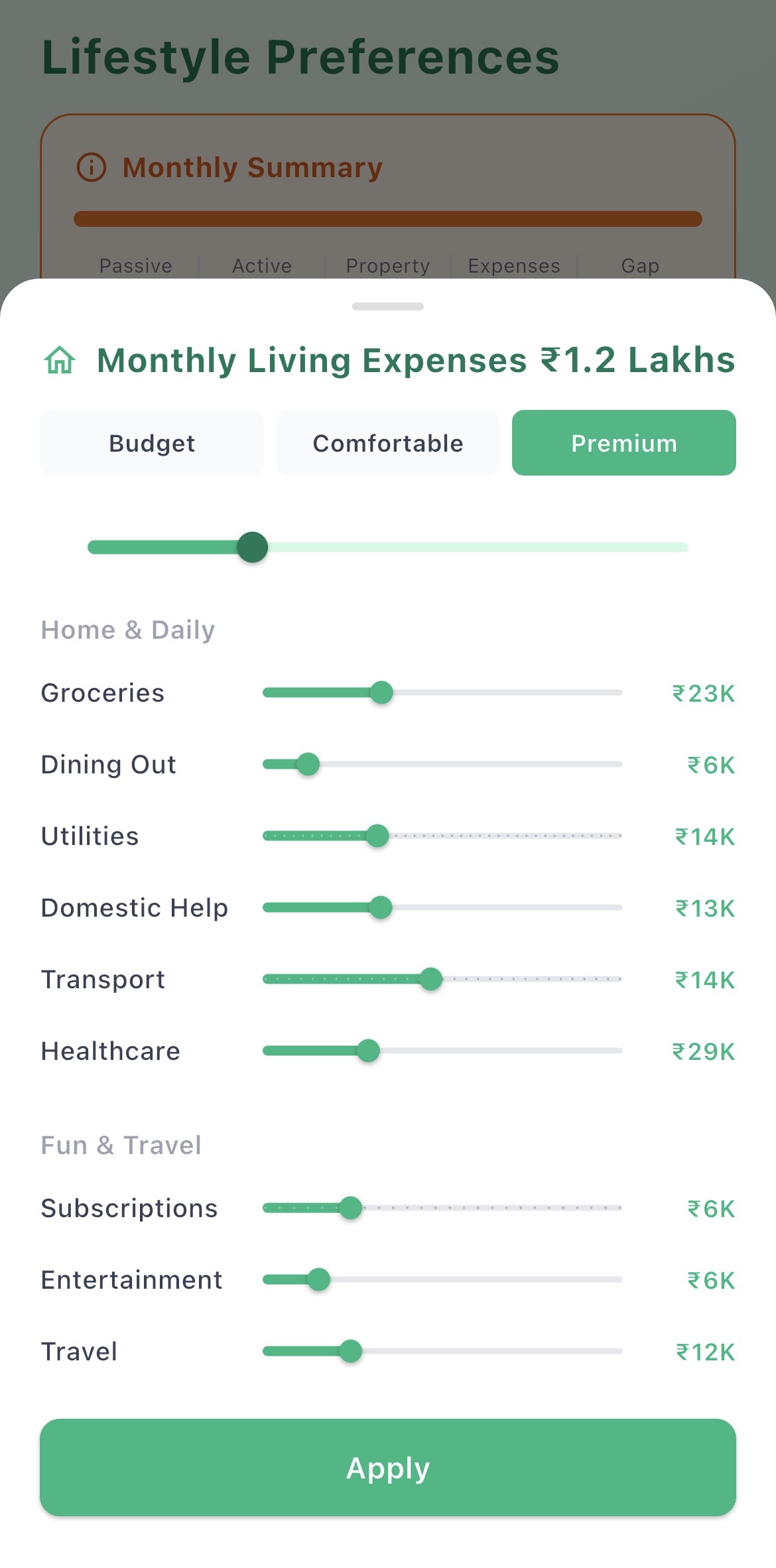
Choosing the right city is the most important retirement decision you'll make. It determines your monthly spend, your corpus requirement, your quality of life, and how smoothly your transition goes. Here's the complete NRI city guide for 2026.
City choice is the single biggest lever in your retirement plan. The same lifestyle in Mumbai requires 3x the monthly spend of Coimbatore. That translates directly into how much corpus you need:
Before choosing a city, use the how much to retire in India calculator to understand what monthly spend your corpus can support — then match that to a city.
Monthly costs for a couple (no kids) with a comfortable but not extravagant lifestyle. Corpus is the approximate amount needed to sustain this lifestyle for 30 years at 7% returns and 6% inflation.
| City | Monthly Spend | USD Equivalent | Corpus Needed (30 yrs) | NRI Rating |
|---|---|---|---|---|
| Mumbai | ₹2.5–4L/mo | $3,000–4,760 | ₹12–18 Cr | ⭐⭐⭐ (expensive) |
| Bangalore | ₹1.8–2.8L/mo | $2,140–3,330 | ₹8–13 Cr | ⭐⭐⭐⭐ (good infra) |
| Delhi NCR | ₹2–3L/mo | $2,380–3,570 | ₹9–14 Cr | ⭐⭐⭐ (traffic/air quality) |
| Hyderabad | ₹1.4–2.2L/mo | $1,670–2,620 | ₹6.5–10 Cr | ⭐⭐⭐⭐⭐ (best value metro) |
| Chennai | ₹1.3–2L/mo | $1,550–2,380 | ₹6–9.5 Cr | ⭐⭐⭐⭐ (South India NRIs) |
| Pune | ₹1.2–1.8L/mo | $1,430–2,140 | ₹5.5–8.5 Cr | ⭐⭐⭐⭐⭐ (top NRI choice) |
| Kochi | ₹1–1.5L/mo | $1,190–1,790 | ₹4.5–7 Cr | ⭐⭐⭐⭐⭐ (Kerala NRIs) |
| Coimbatore | ₹70K–1.1L/mo | $833–1,310 | ₹3.2–5 Cr | ⭐⭐⭐⭐ (affordable, calm) |
| Mysore | ₹65K–1L/mo | $774–1,190 | ₹3–4.5 Cr | ⭐⭐⭐⭐ (quality of life) |
| Tier 3 / hometown | ₹45–75K/mo | $536–893 | ₹2–3.5 Cr | ⭐⭐⭐ (low cost, low amenities) |
Metro cities (Mumbai, Bangalore, Delhi, Hyderabad, Chennai) offer the best infrastructure, hospitals, airports, and social life — but at significant cost.
Bangalore is the most popular return destination for tech NRIs, for obvious reasons: the existing NRI community, top private hospitals, international schools, good weather, and a familiar tech-adjacent culture. The downsides are traffic, rising rents, and a monthly spend floor that's hard to get below ₹1.5L for a couple.
Best for: NRIs who want a metro lifestyle with good hospitals and familiar social environment. Needs ₹8–12 Cr corpus for comfort.
Hyderabad has emerged as the best-value major metro for returning NRIs. Lower rents than Bangalore (by 20–35%), less traffic chaos, good private hospitals, and strong Telangana-diaspora community. HITEC City gives it a familiar feel for tech workers.
Best for: NRIs who want metro infrastructure without metro prices. ₹6–10 Cr corpus works well here.
Mumbai is India's most expensive city. Rents in decent South Mumbai or Bandra areas can exceed ₹1.5–2L/month alone. Unless you have strong personal or family ties to Mumbai — or can live in the extended suburbs — the financial case for retiring in Mumbai is weak compared to other metros.
Best for: NRIs with family in Mumbai or who require Mumbai's specific lifestyle. Needs ₹12–18 Cr corpus for genuine comfort.
The honest truth: most NRI retirements with a ₹3–7 crore corpus are only viable in Tier 2 cities. These cities offer surprisingly good infrastructure in 2026 — but at 40–60% of metro costs.
Pune consistently ranks as the top NRI return destination in surveys. It combines Tier 1.5 infrastructure (good hospitals, international schools, airport) with Tier 2 costs. The Aundh-Baner-Kothrud triangle has a strong NRI community and everything an R2I family needs within reach.
Best for: NRIs who want urban convenience without metro prices. Corpus of ₹5–8 Cr works comfortably.
For Malayali NRIs, Kochi is the obvious choice. Strong existing NRI community (particularly Gulf returnees), good private hospitals, major airport with direct international flights, and a pleasant climate. Costs are lower than Bangalore, quality of life is high.
Best for: Keralites and South India NRIs. ₹4.5–7 Cr corpus range works well.
Coimbatore is the hidden gem for Tamil Nadu NRIs. It's significantly cheaper than Chennai, has a good hospital ecosystem (PSG, Kovai Medical), reliable weather, and a well-established business community. Less glamorous than the metros — but for retirement, that's often a feature, not a bug.
Best for: Tamil NRIs who value cost efficiency and calm. ₹3–5 Cr corpus range works well.
Mysore has emerged as a retirement-focused city with good infrastructure for its size: solid private hospitals, a manageable pace, proximity to Bangalore (3.5 hours), and beautiful surroundings. It's one of India's most liveable cities by air quality and traffic standards.
Best for: NRIs prioritizing quality of life over urban buzz. ₹3–4.5 Cr corpus range is viable.
When choosing where to retire, NRIs often focus entirely on cost — but several other factors significantly affect long-term happiness:
As you age, hospital proximity and quality matter more than rent savings. Prioritize cities with major private hospital chains (Apollo, Fortis, Manipal, Aster). Tier 3 cities often lack this, which is a serious risk for retirees in their 60s and 70s.
If you'll travel to the US frequently (for children, medical visits, or lifestyle), airport access matters. Bangalore, Hyderabad, Chennai, Mumbai, and Delhi have direct US flights. Kochi and Pune have good connectivity but fewer direct international routes.
Returning after 15–20 years abroad, many NRIs underestimate how much they value community with people who share similar experiences. Cities with dense NRI communities (Bangalore, Pune, Hyderabad, Kochi) ease the reintegration significantly.
If you're returning with school-age kids, international school availability is critical. Good IB/IGCSE schools exist in all major metros and some Tier 2 cities — but choices thin out quickly in smaller cities.
See the full India vs USA cost of living comparison to calibrate your monthly budget expectations, and use our ₹5 crore analysis to see what that corpus sustains city by city.
The most common R2I mistake is choosing a city first (usually Bangalore or Mumbai because that's where family is) and then trying to make the finances work. The better approach:
A ₹5 crore corpus can fund a genuinely good life in Pune or Hyderabad. It cannot fund the same life in South Mumbai. Choosing the right city is worth years of additional savings in corpus terms.
See your corpus projection for different cities — and find the one that works for your financial situation.
Compare corpus projections across cities in Breather — and see where your savings go furthest.