NRI FIRE Scenario

Can You Retire in India
With $500K?

$500,000 converts to roughly ₹4.2 crore. It's half of the $1 million benchmark — but does it cut the viability in half too? Here are four real scenarios that show where $500K works, and where it doesn't.

What $500K looks like when you move to India

At current rates, $500,000 converts to approximately ₹4.2 crore. That's more than many Indians earn in a lifetime — but for an NRI planning a 30–35 year retirement, the math is tighter than it sounds.

Unlike $1 million, $500K leaves very little room for error. Three things will define whether it works:

The 401k problem is amplified at $500K

If half your savings are in a 401k and you withdraw early (before 59½), you lose 30–40% to federal taxes and the 10% penalty. On $250K in a 401k, that's $75–100K gone before the money even arrives in India. Your effective corpus drops to ₹3.0–3.4 crore — a fundamentally different starting point.

Inflation pressure is more acute

With $1M, your investment returns can outpace your drawdown for the first 10–15 years. With $500K, you're much closer to the edge where inflation and spending erode the corpus faster than returns rebuild it. City choice and spend discipline are non-negotiable.

There's no buffer for surprises

A major medical event, a child's college abroad, or a home renovation can cost ₹30–80L. On a ₹4.2 crore corpus, that's a 7–19% hit. These are plan-breaking risks without a buffer strategy.

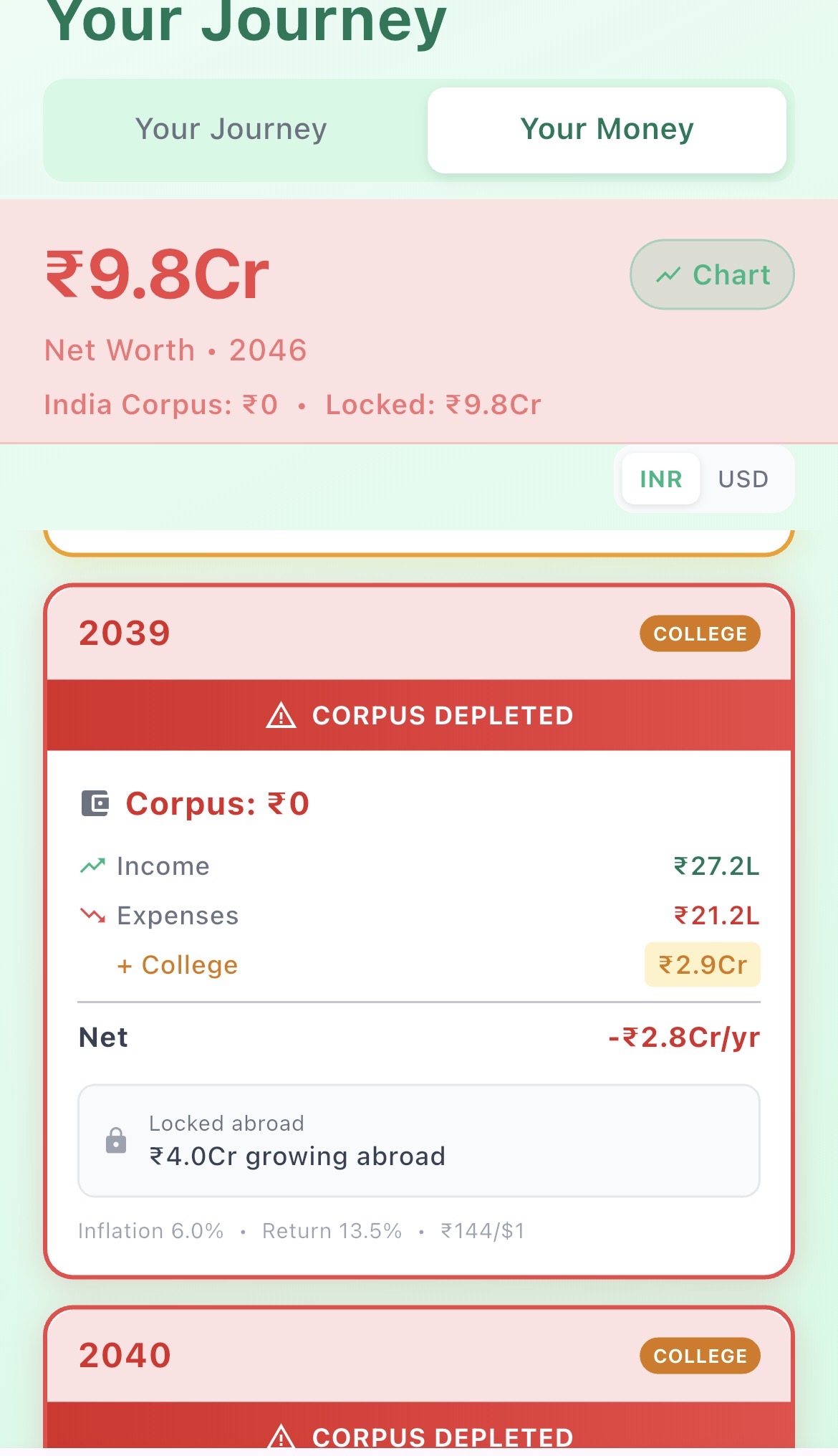
💡 The Breather app models your $500K situation — including 401k penalties, currency conversion, and city-specific inflation — and shows your 20-year projection in minutes.

Scenario 1 — Age 50, Tier 2 city, no kids at home

The most viable $500K scenario. Returning at 50 with a shorter runway, settled lifestyle, and a Tier 2 city significantly reduces the math pressure.

Inputs
Age at return
50
Total savings
$500K
401k portion
None (liquid)
City
Coimbatore
Monthly spend
₹90K
₹2.1 Crore — Viable

Verdict: $500K works here. A disciplined ₹90K/month spend in a Tier 2 city, returning at 50 with no 401k penalty, leaves a meaningful cushion at 80. It's lean but the math holds.

Scenario 2 — Age 45, Hyderabad, 1 kid in school, 401k penalty

A common US NRI scenario: most savings in tax-advantaged accounts, mid-40s return, one child still in school. The 401k penalty alone changes the picture significantly.

Inputs
Age at return
45
Total savings
$500K
In 401k (penalty)
$250K
City
Hyderabad
Monthly spend
₹1.3L
Kids
1, private school
66 — Runs Short
⚠️ After 401k penalties, the effective corpus is closer to ₹3.2 crore. Combined with school fees and a ₹1.3L/month spend in Hyderabad, the money runs out around 66 — leaving potentially 20 more years without savings.

Verdict: $500K with significant 401k exposure at 45 is not enough. Either delay the move, grow the corpus to $700–800K, or find a way to avoid the early 401k penalty.

Scenario 3 — Age 48, hold the 401k strategy

The smartest $500K move: keep the 401k invested, retire to India on liquid savings only, and unlock the 401k penalty-free at 59½.

Inputs
Age at return
48
Liquid savings
$200K (~₹1.7 Cr)
401k (held)
$300K
City
Pune
Monthly spend
₹1L
401k unlocks
Age 59½
$600K+ — Strong Position

Verdict: The $300K 401k held for 11 years at 7% growth doubles to $620K+. Combined with the liquid portion carefully drawn down, this is the best way to make $500K work. The 11 years of 401k compounding saves the plan.

Scenario 4 — Age 42, Bangalore, 2 kids in private school

The scenario where $500K clearly fails. Metro costs, young kids, and a 40-year runway are incompatible with a $500K corpus.

Inputs
Age at return
42
Total savings
$500K
City
Bangalore
Monthly spend
₹2L
Kids
2, private school
54 — Critical
⚠️ $500K in Bangalore with 2 kids and an NRI lifestyle runs out before age 55. This is not retirement — it's a 12-year leave of absence with no financial safety net at the end.

The $500K rule of thumb for NRIs

Based on these scenarios, here's the honest framework for deciding if $500K is enough:

If you have or are approaching $1M, see how the math changes with double the corpus — the additional flexibility is substantial.

Run your specific $500K scenario in Breather. Enter your exact savings split, age, city, and spend — and see if your money lasts your full retirement.

Model your $500K scenario in Breather

Enter your savings, 401k split, city, and spend — see your 20-year projection in minutes.
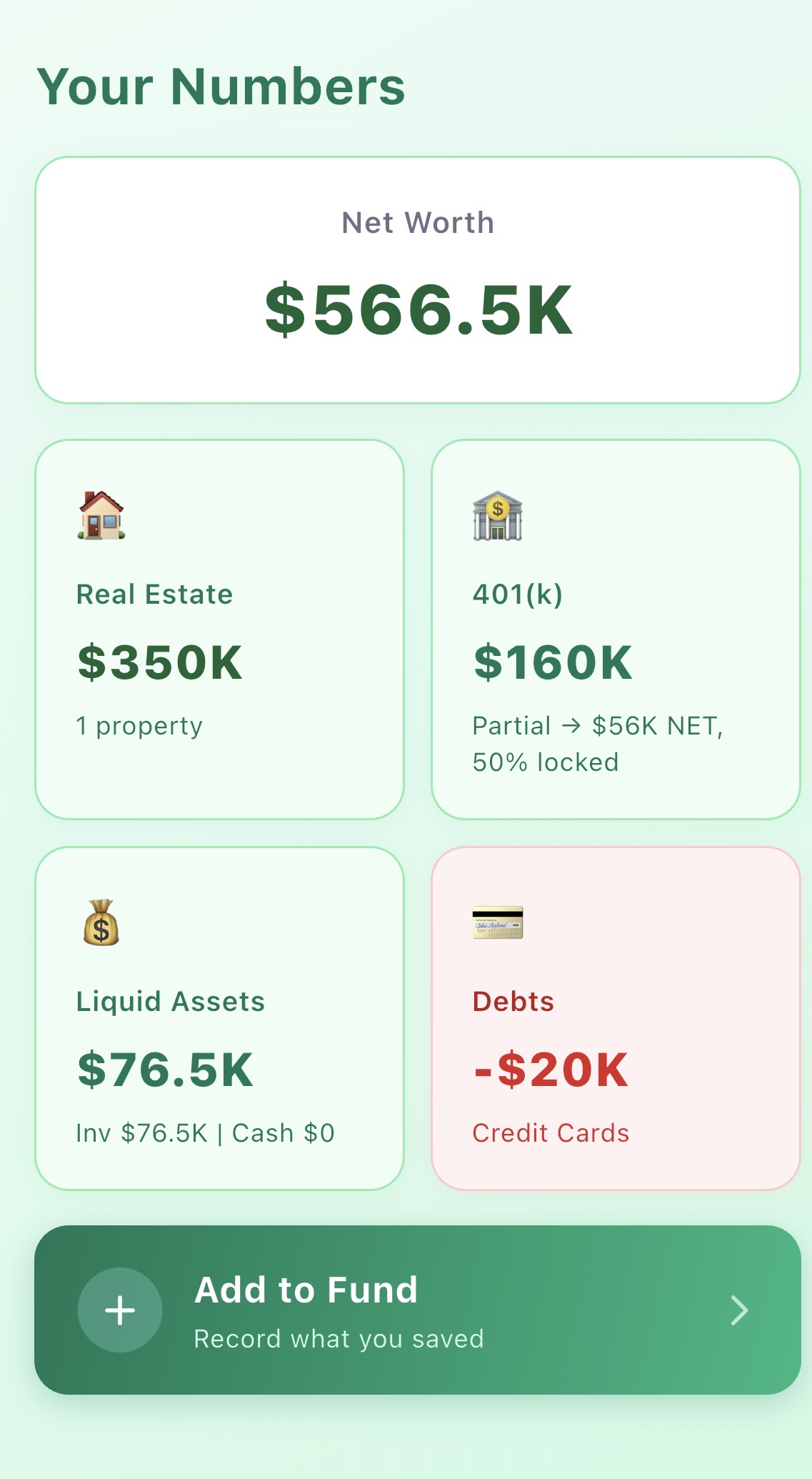
Breather Numbers tab — net worth with 401k, real estate and liquid assets Corpus Depleted warning in Breather — red year cards showing financial risk Breather monthly expenses — lifestyle cost breakdown by category

Common questions about retiring in India with $500K

Is $500,000 enough to retire in India comfortably?
It depends heavily on your age and city. At 50+ in a Tier 2 city with spend under ₹1L/month, yes. At 42 in a metro with kids in private school, no — the money runs out by your mid-50s. $500K is viable only in specific, disciplined scenarios.
How much is $500,000 in Indian rupees?
At current exchange rates (around ₹84/USD), $500,000 is approximately ₹4.2 crore. Note that if you have significant 401k savings, early withdrawal taxes and the 10% penalty can reduce your effective corpus to ₹3.0–3.4 crore after conversion.
Should I withdraw my 401k early to fund a $500K retirement in India?
Almost certainly not. Early 401k withdrawal at 45 destroys 30–40% of that money in taxes and penalties. The smarter play is to retire on liquid savings, keep the 401k invested, and access it penalty-free after 59½. The compounding over 10–15 years can double the 401k value.
What monthly income does $500K generate in India?
₹4.2 crore at 7% annual return generates roughly ₹2.45L/month in income. But you can't draw that full amount — you need investment returns to outpace inflation. A sustainable draw for a 30-year retirement is closer to ₹1–1.3L/month at today's values.
What's the difference between retiring with $500K vs $1M in India?
$1M nearly doubles the scenarios that work. With $1M you can consider metro cities, return in your early 40s, or carry school-age kids. With $500K, all three of those factors individually can make the plan fail. $1M provides a buffer for surprises; $500K does not.

Run your $500K scenario today

See how far your savings go — including 401k penalties, Indian inflation, and city costs. Free to start.